No, you're not legally required to hire a realtor to buy new construction in Texas, and the friendly person waiting for you in the model home works for the builder, not for you. Skipping your own agent almost never knocks the commission off the price, because the builder already budgeted that money before you ever walked in. A buyer's agent still does a short, specific list of real jobs on a new build, so the honest question is not whether you can go alone. It's whether that short list is worth having someone on your side of the table.
Here's the part a lot of agents won't say out loud. On new construction, there's honestly not a lot for a realtor to do. The builder controls the contract, the title company, the schedule, and the whole sales process. That's just how these deals run, and that limited scope is exactly why a high rebate model holds together instead of sounding like a gimmick. If the day-to-day work is smaller, handing most of the commission back to the buyer is a coherent product, not a trick.

Walk into a model home in San Antonio, Cibolo, or New Braunfels and someone greets you with a floor plan and a list of incentives. That person is not your representative. Their job is to sell that builder's homes on that builder's contract. There is no single TREC bulletin that says "the builder's rep always represents the builder" in one clean phrase, but you can assemble that conclusion from four pieces of Texas law that are each clear on their own.
A person can sell a builder's new homes without holding a real estate license at all, as long as they are a true employee of the builder. TREC says it plainly: you do not need a license to sell a builder's new houses if you are an employee of the builder, and being an independent contractor is not enough (TREC FAQ). The rule that decides whether a real employer-employee relationship exists is 22 TAC 535.34, which requires the sales agent to be directly compensated by the owner, with withholding of income taxes and FICA as evidence of employment (22 TAC 535.34). So many model-home greeters are not even license holders. They are paid by the builder to sell the builder's inventory.
Sometimes the counselor is a licensed agent. That doesn't put them on your side either. Texas requires license holders to give you the Information About Brokerage Services notice, the IABS, at the first real conversation about a specific property (TREC IABS). The IABS lays out the possible roles: agent for the owner, agent for the buyer, or intermediary with the written consent of each party (TREC IABS guidance). A Texas license holder is a fiduciary whose primary duty runs to the client (TREC rules and canons). If the licensed person in the model works under the builder's listing arrangement, their client is the builder. They must treat you fairly as a customer, but full advocacy for your side is not their job.
You might wonder if the model-home rep could just represent both of you. In Texas, they can't. TREC is direct: Texas law does not permit dual agency, and a broker who agrees to represent more than one party must act as a statutory intermediary instead, under TRELA 1101.561(b) (TREC dual agency FAQ). An intermediary with no separate appointments cannot give advice that favors either side, which is the opposite of what a dedicated buyer's agent does for you. Put the four pieces together, the employee exemption, the IABS roles, the dual-agency ban, and the fiduciary duty to the client, and you land in the same place every time. Walking into the model alone doesn't create anybody who represents you. If you want someone on your side of the table, that is a buyer's agent you bring in separately.
One note on 2026: Texas tightened its written buyer-representation rules effective January 1, 2026, which makes the paperwork for hiring your own agent clearer, but it does not turn a builder's sales counselor into your agent (TREC 2026 buyer-rep changes).

On a resale in Bexar County, both sides usually work from a TREC promulgated contract everyone in the state knows. New construction is different. You almost always sign the builder's own contract, written by the builder's lawyers, for the builder.
That's legal. TREC's rules require license holders to use Commission-approved forms, but there is a written exception for a form prepared by the property owner, or by an attorney and required by the owner (22 TAC 537.11). A production builder owns the lot and home, so it can require its own paper, and your agent filling in the blanks is not breaking the promulgated-form rule (though no agent can draft legal language for you).
Builder contracts tend to handle option periods, deposits, financing deadlines, appraisal-gap risk, and completion dates differently than the resale form, and they come with their own amendment packages. Those patterns vary by builder, so the specifics depend on the contract in front of you. On a resale you are reading a form both sides already trust. On new construction you are reading a document written to protect the company selling you the house, which is a real reason to have someone who has read that kind of paper before.
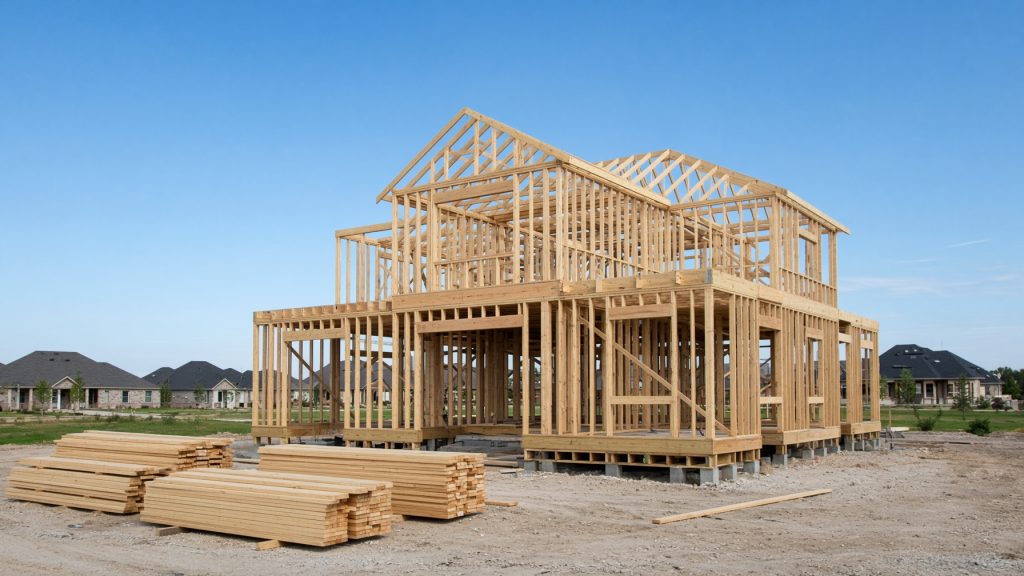
Let's stay honest, because that is the point. The builder's side already covers a lot: the community and floor plans, current incentives, the design studio, construction updates, their preferred lender, and closing coordination. On a clean deal you'll spend more time with the builder's sales counselor than with your own agent, and that's normal.
So what's left that's real? A short list.
That's the honest scope. It's narrower than on a resale, and worth having, especially for a first-time or out-of-area buyer, but it's not heroic.
Here's what a buyer's agent doesn't do, so nobody oversells you. An agent doesn't rewrite the builder's contract or force a TREC resale form onto a production builder, doesn't control construction quality day to day (that is on the builder, the inspector, and the warranty), doesn't unlock a secret discount for every buyer (real incentives exist, but magic discounts are marketing fiction), and doesn't turn the model-home counselor into your representative. Being clear about that is why the rebate can be the main benefit instead of invented services.
This is where the "just go straight to the builder and save the commission" idea falls apart. Builders generally budget cooperating-broker compensation as a cost of sale. When no outside buyer's agent gets paid, that money doesn't automatically turn into a lower price. Industry explainers repeat the point: there is usually no automatic discount for going unrepresented, because the commission is typically built into the price either way (Zillow; Realtor.com). Skip the agent and you usually give up representation and any rebate path, without a matching price cut.
No reliable Texas study shows unrepresented buyers paying less for the same plan in the same community, and no major builder publishes a price sheet that says "subtract the buyer-broker percentage if you come alone." So don't trust a number nobody can point to. Use a simple test: if a sales rep says going without an agent saves you three percent, ask them to write that discount into the contract. If they will, you have real savings on paper. If they won't, the savings story was never real, and you just handed back your representation while the commission budget stayed on the builder's side.
That's why a rebate is the clean economic answer. If the builder is going to pay a buyer's broker anyway, the useful move is having representation and getting most of that budgeted commission handed back to you. Commission Cash Back is a licensed Texas brokerage, and the model is straightforward: on new construction the rebate is 2.5% of the purchase price at $300,000 and up and 2% below $300,000, and on resale it's 2% at $300,000 and up and 1.5% below, with no dollar floors. Rebates are subject to lender approval, and we never promise a fixed dollar amount before a price is on the table. You can see how the math works on our new construction rebate page.
One operational rule can quietly kill both your representation and your rebate: builders decide when a buyer's agent gets paid, and eligibility usually turns on registering at your first visit to the community. Toll Brothers is the clearest published example: it requires electronic registration at the client's first visit, and if you visited earlier and got registered by a Toll sales rep, that voids the outside agent's commission on the sale (Toll Brothers). Highland Homes ties pay to a buyer representation agreement and a REALTOR addendum submitted within ten business days of the contract (Highland Homes). Several D.R. Horton community pages in the San Antonio area say in the fine print that the buyer's agent must accompany and register the buyer on the first visit, though Horton does not publish one statewide Texas commission schedule, so the specifics are community by community (D.R. Horton).
That's the short version. The full builder-by-builder matrix, with the exact windows, re-registration rules, and what to do if you already toured a community alone, lives in our separate guide on registering your agent before the first builder visit. Read it before you tour anything. For a next step on a specific community, the builder pages for names like Highland, Toll Brothers, and D.R. Horton are the place to start.
Legally, no. The person in the model is not your agent, going alone rarely cuts your price, and the work on a new build is smaller than on a resale. What a buyer's agent adds is a short, real list: inspections and report review, plat and lot review, and catching the amendments the builder would rather you skim past. If you want that plus most of the commission handed back, that is the whole idea behind a rebate brokerage, and it only works if your agent is on the builder's paperwork before your first visit.
Do you legally need a realtor to buy new construction in Texas? No. Texas law does not require a buyer to hire a realtor to purchase new construction, and builders such as Toll Brothers state outright that an agent is not required (Toll Brothers FAQ). The trade-off is that no one at the transaction represents your interests, and you give up any commission rebate a buyer's broker could have passed to you.
Does the builder's sales rep represent me when I buy new construction in Texas? No. The sales rep in a Texas model home works for the builder, not for the buyer. That person may be an unlicensed builder employee, which Texas allows under a true employer-employee relationship (TREC FAQ; 22 TAC 535.34), or a licensed agent whose client is the builder. Either way, Texas does not permit dual agency, so the same person cannot flip to representing you (TREC dual agency FAQ).
Will I get a lower price on new construction if I buy without an agent in Texas? Usually no. Builders typically budget the buyer-broker commission as a cost of sale, so skipping an agent doesn't automatically turn that money into a lower price (Zillow; Realtor.com). If a sales rep claims going unrepresented saves you a specific percentage, ask them to write that discount into the contract. If they won't put it in writing, the savings aren't real.
Can a buyer's agent give me a commission rebate on new construction in Texas? Yes. A licensed Texas agent is allowed to rebate part of their own commission to the buyer under TREC rules (22 TAC 535.147(d)). Commission Cash Back is a licensed Texas brokerage that does exactly this: on new construction the rebate is 2.5% of the purchase price at $300,000 and up and 2% below $300,000, and on resale it's 2% at $300,000 and up and 1.5% below, with no dollar floors. Rebates are subject to lender approval, and the exact dollar figure depends on your purchase price.
When should I bring in my own agent on a Texas new build? Before your first visit to the community. Many Texas builders condition a buyer's agent commission on registering at that first visit, and Toll Brothers, for example, voids the outside agent's commission if a Toll sales rep registered the buyer on an earlier solo visit (Toll Brothers). If you want representation and a rebate, your agent needs to be named on the builder's paperwork from the start, covered in full in the separate guide on registering your agent before the first builder visit.